

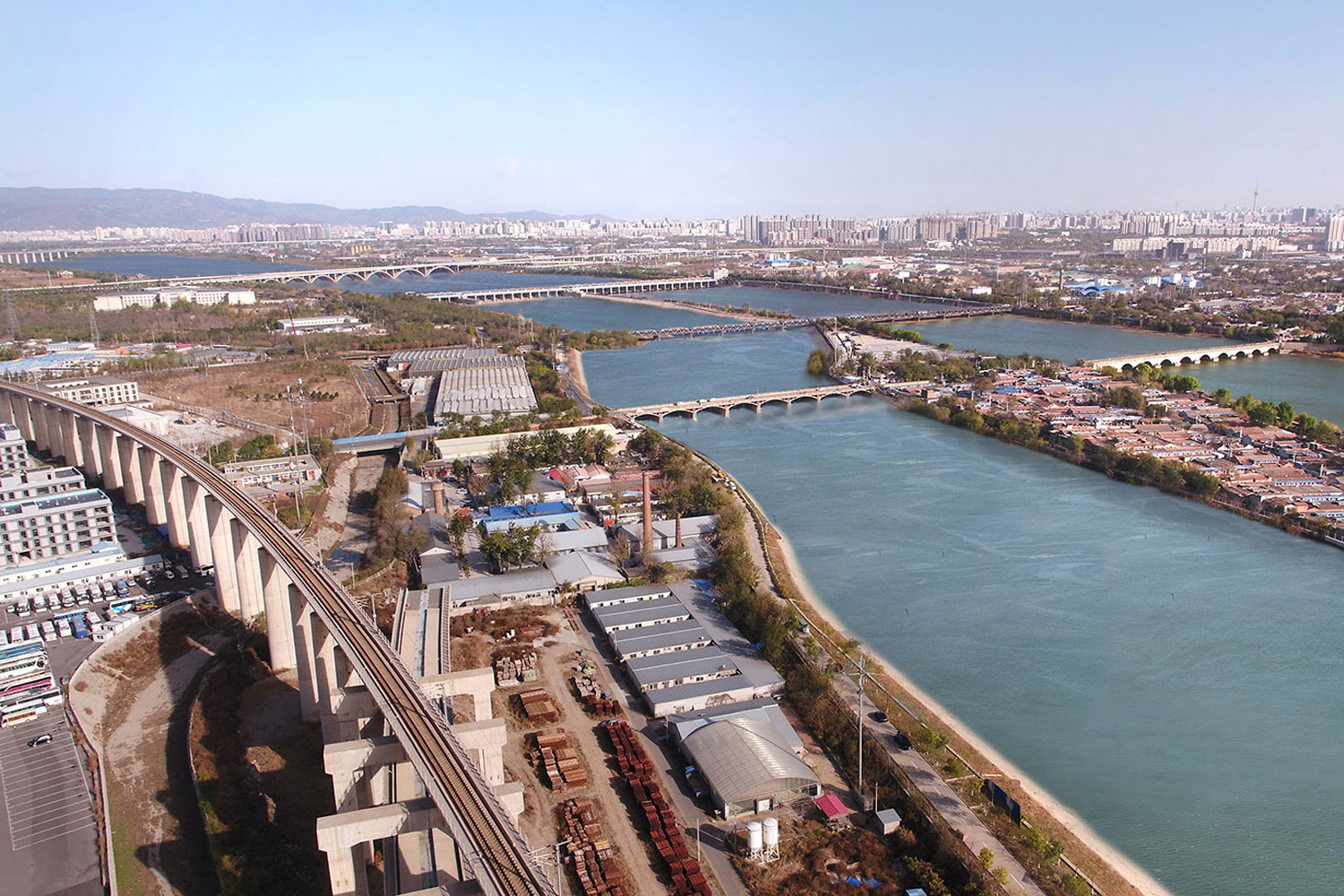
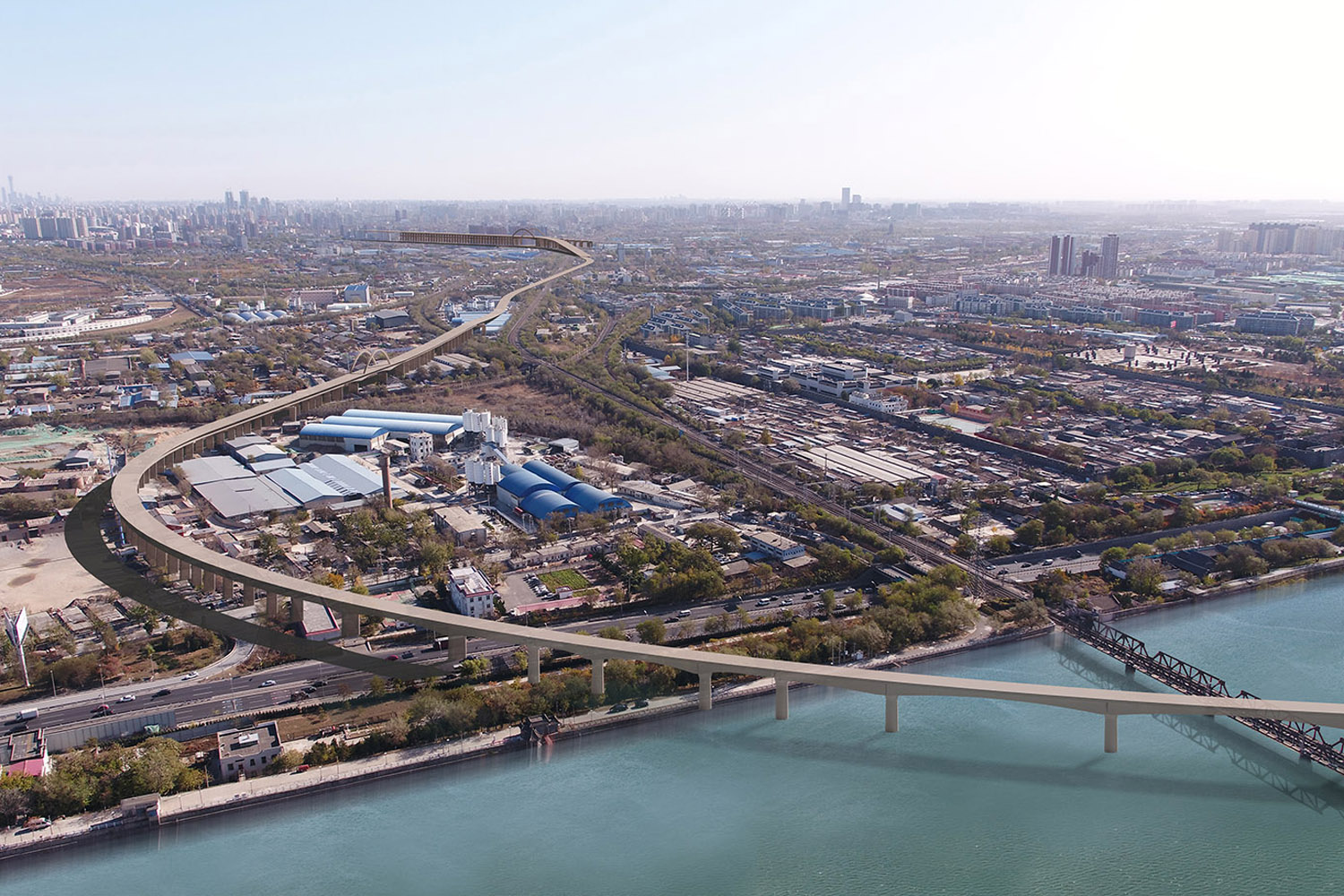
Over the past decade, as part of the economic stimulation program, China’s high-speed railway system has been growing at rapid pace to the world longest, connecting conveniently major cities and catering at peak times such as Chinese New Year to millions of travelers. Massive, monumental overpasses, carrying railway lines and trains running at a speed of up to 350 km/h are familiar to everyone having lived in or travelled to and from Beijing or another Chinese megacity. While these viaducts have been constructed primarily according to safety than to urban landscaping considerations, the areas below often appear abandoned, are at best filled with fenced parking spaces, or are just waste land and idle. The Transport Oriented Development (TOD) of the Beijing Fengtai High Speed Railway project includes the construction of the New Fengtai Railway station as well as the New Fengtai Railway station access bridge with a total length of almost 10 km – the core element being a large bridge viaduct entering the Chinese capital from the south western outskirts, cutting into the city’s Fengtai district whilst rising above rivers, other bridges as well as several highways and intersections.

Fengtai High Speed Railway Bridge
The relationship between a city's infrastructure, its urban landscape and its inhabitants shouldn't be a mutually restricting one, but rather interactive, lively and infused with vitality.
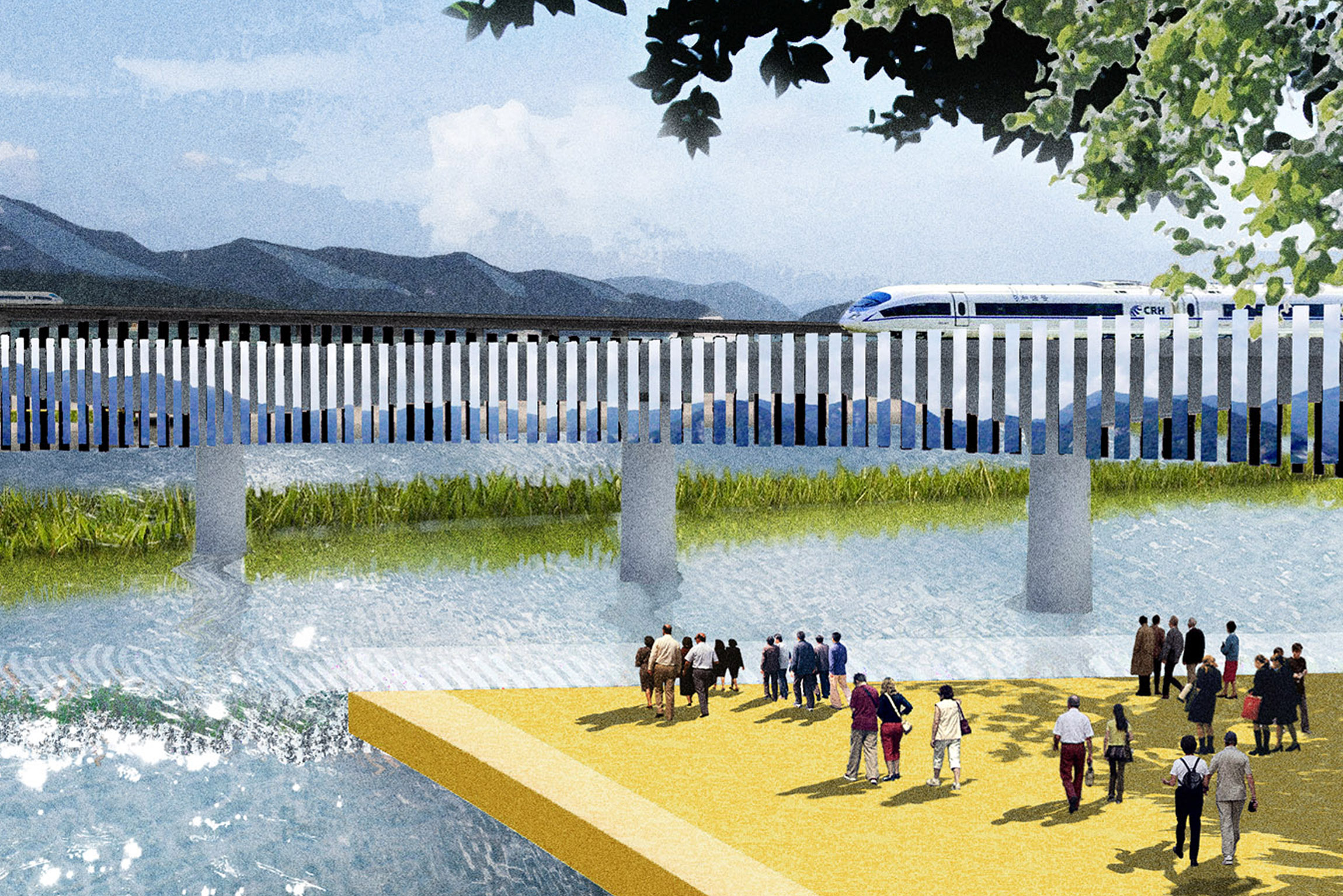
The main conceptual idea of Crossboundaries' proposed land- and cityscape design was to “weave” and to “stitch” together the different sites and zones that are currently separated by the new Fengtai bridge viaduct, in order to tie them together in a more organic, natural way and to create high quality spaces.
DATA
Project: Urban and Landscape Design of Fengtai
High Speed Railway Bridge
Client: China Railway
Program: Urban and Landscape Design
Location: Fengtai District, Beijing, China
Building area: 9.7km (length)
Design period: March-August 2018
CREDITS
Partners in Charge: Binke Lenhardt, DONG Hao
Design Team: GAO Yang, HOU Jinghui,
YU Zhaoxiong, HU Bingyu, WANG Xudong
COLLABORATORS
Shuimu Space Urban Transportation and Architectural
Design Studio, Beijing Architectural Design and
Research Institute
Point of Departure: Separation and Interference.
Similar to other railway viaducts, as they enter and pass through urban areas, the Fengtai High Speed Railway Bridge appears more like a disruptive element than an integrated part in its surroundings. This interference and disharmony with the overall Beijing urban landscape raised the attention of the local city government especially as this particular infrastructure project is developed adjacent historical sites.
Crossboundaries was asked to look into the landscape and urban design of the designated area and to come up with a more integrated and inclusive solution. The area to be redesigned was defined as starting from the Lugou Bridge and scenic area outside the Fifth Ring Road in the West, continuing towards the East to the New Fengtai High Speed Railway station zone and continuing further across the Western Forth Ring Road, stretching in total over about 10km.
“The relationship between a city’s infrastructure, its urban landscape and its inhabitants shouldn’t be a mutually restricting one, but rather interactive, lively and infused with vitality”, says Dong Hao, co-founder of Crossboundaries, “Infrastructure is resulting in an improvement of the lifestyle and even an increase of income for many urban residents, at the same time the arrival of residents can stimulate consumption power and gives the opportunity to optimize the use of the available land for different kinds of activities.”
What initially, according to the brief, was a project to create a more aesthetic, harmonious relationship between Fengtai Bridge and its surroundings, evolved soon into a comprehensive TOD design concept. Just “beautifying” a bridge was not an option for Crossboundaries.
Transforming the Landscape: Integration and Optimization
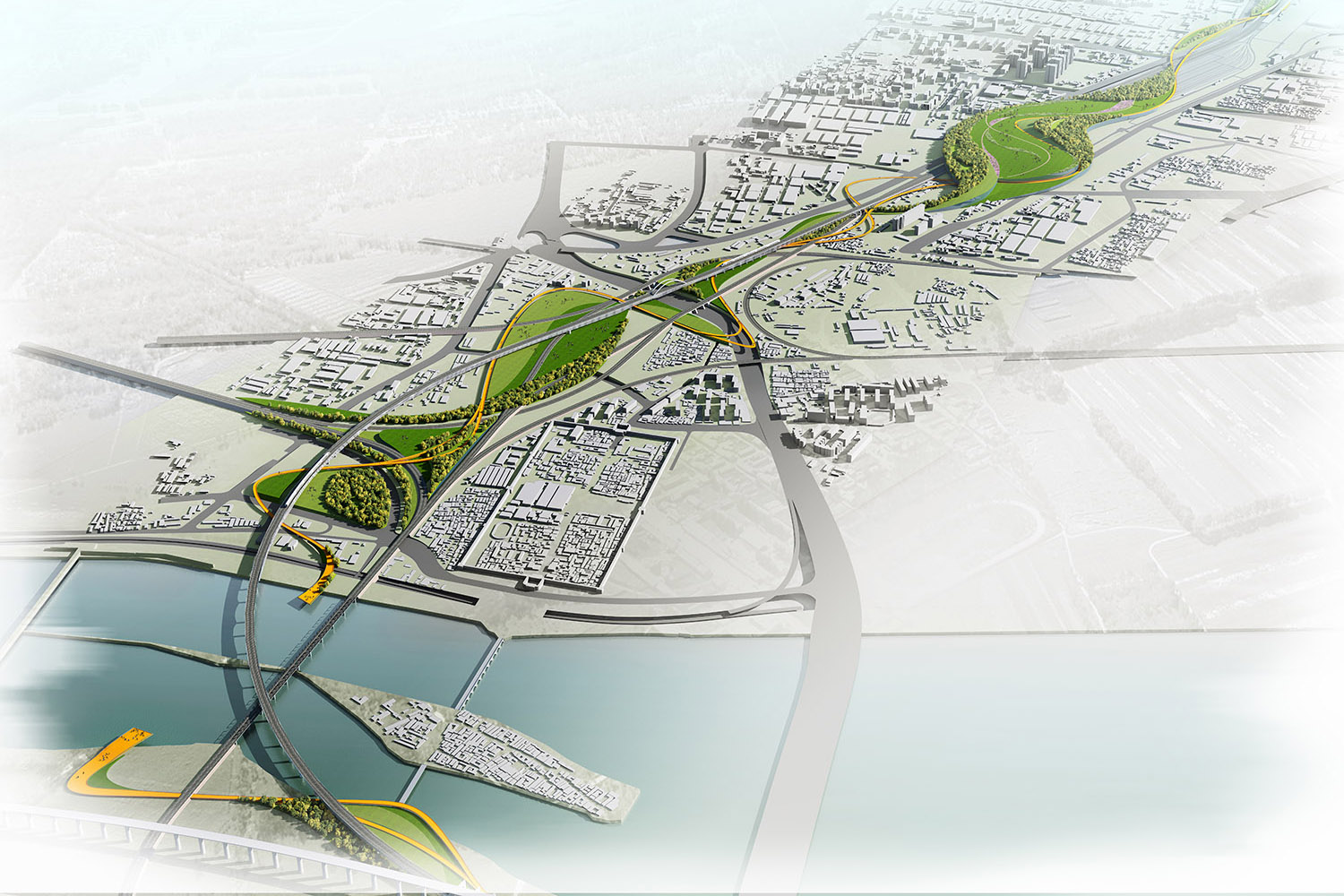
The main conceptual idea of Crossboundaries’ proposed land- and cityscape design was to “weave” and to “stitch” together the different sites and zones that are currently separated by the new Fengtai bridge viaduct, in order to tie them together in a more organic, natural way and to create high quality spaces. The planners further approached the design in a way that allows for a step-by step-implementation starting from the Lugou Bridge over the total stretch of 10 km from east to west.
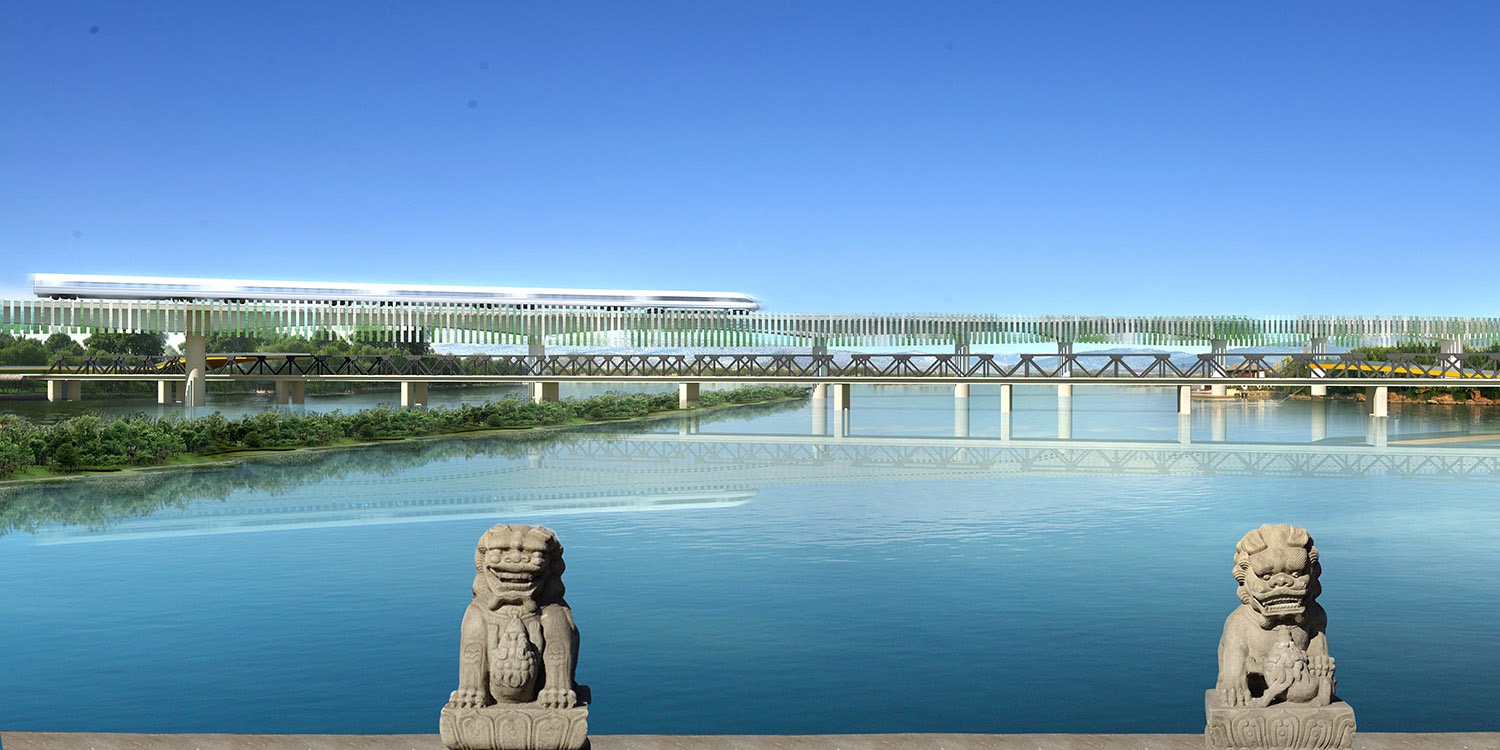
Reflections. Lugou Scenic Area.
This old stone bridge, crossing over Yongding River (in English also called “Marco Polo Bridge”), is located about 15 km from today’s city center. A battle that started here in July 1937 marked the beginning of the Second Sino-Japanese War, hence Lugou bridge, together with the historic 17th-century Wanping Fortress (today a museum) and its surroundings remain until today a point of historic significance for the Chinese.
Passing by about 1 km further to the north and clearly visible from Lugou Bridge is the colossal viaduct of the New Fengtai Bridge. Its design follows mainly safety regulations, it appears as an “interrupter”, cutting through and set rather unharmonious in the urban landscape.
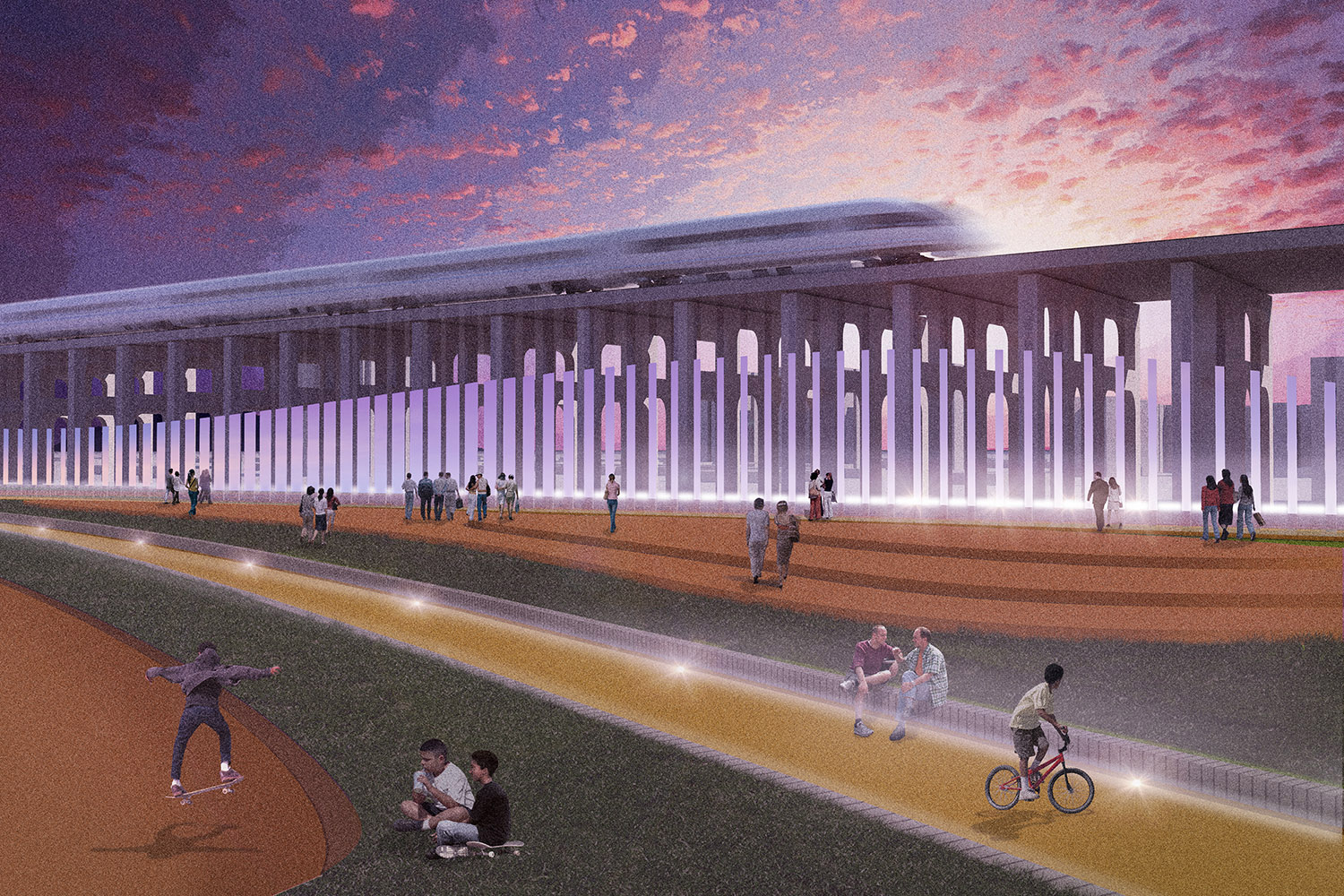
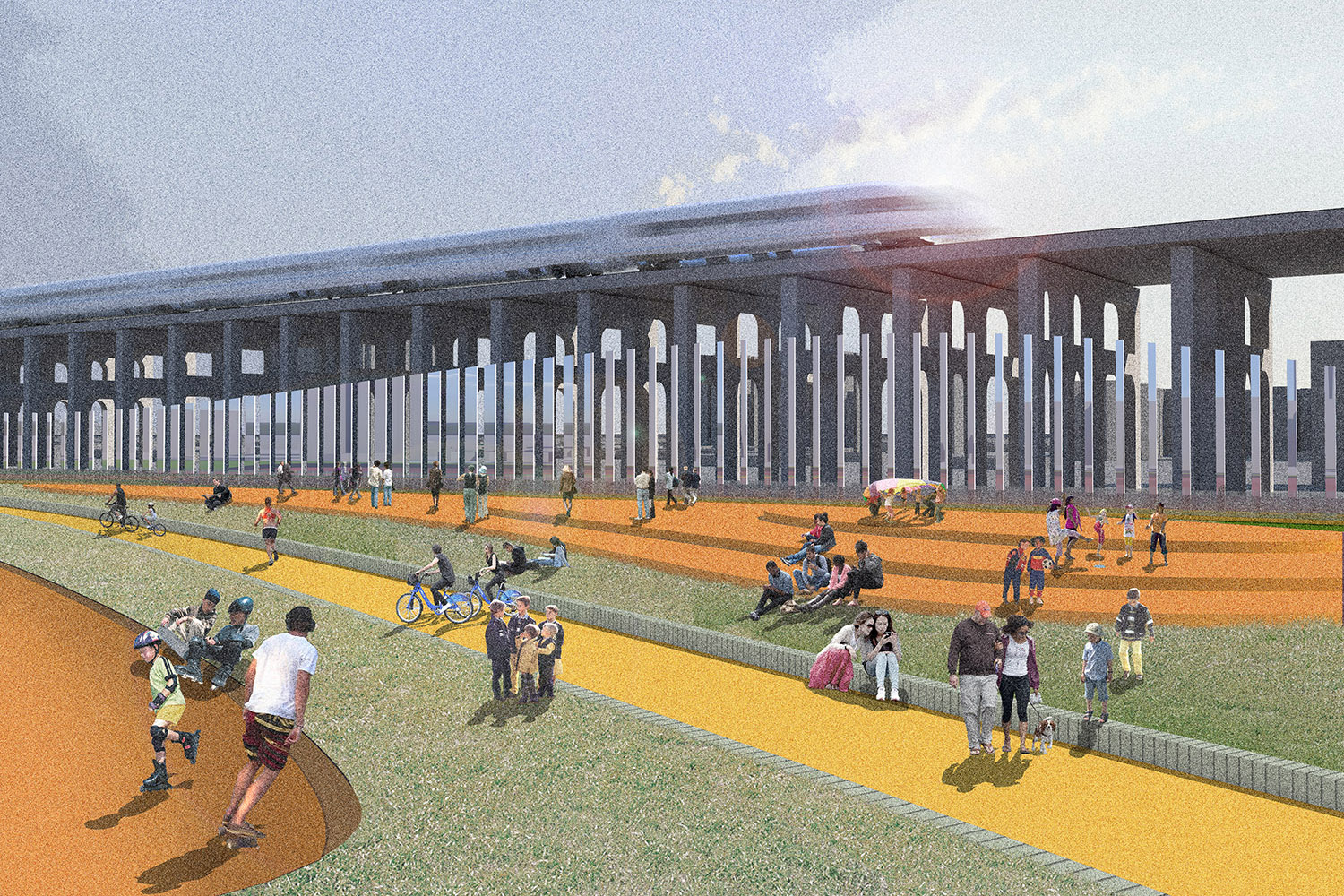
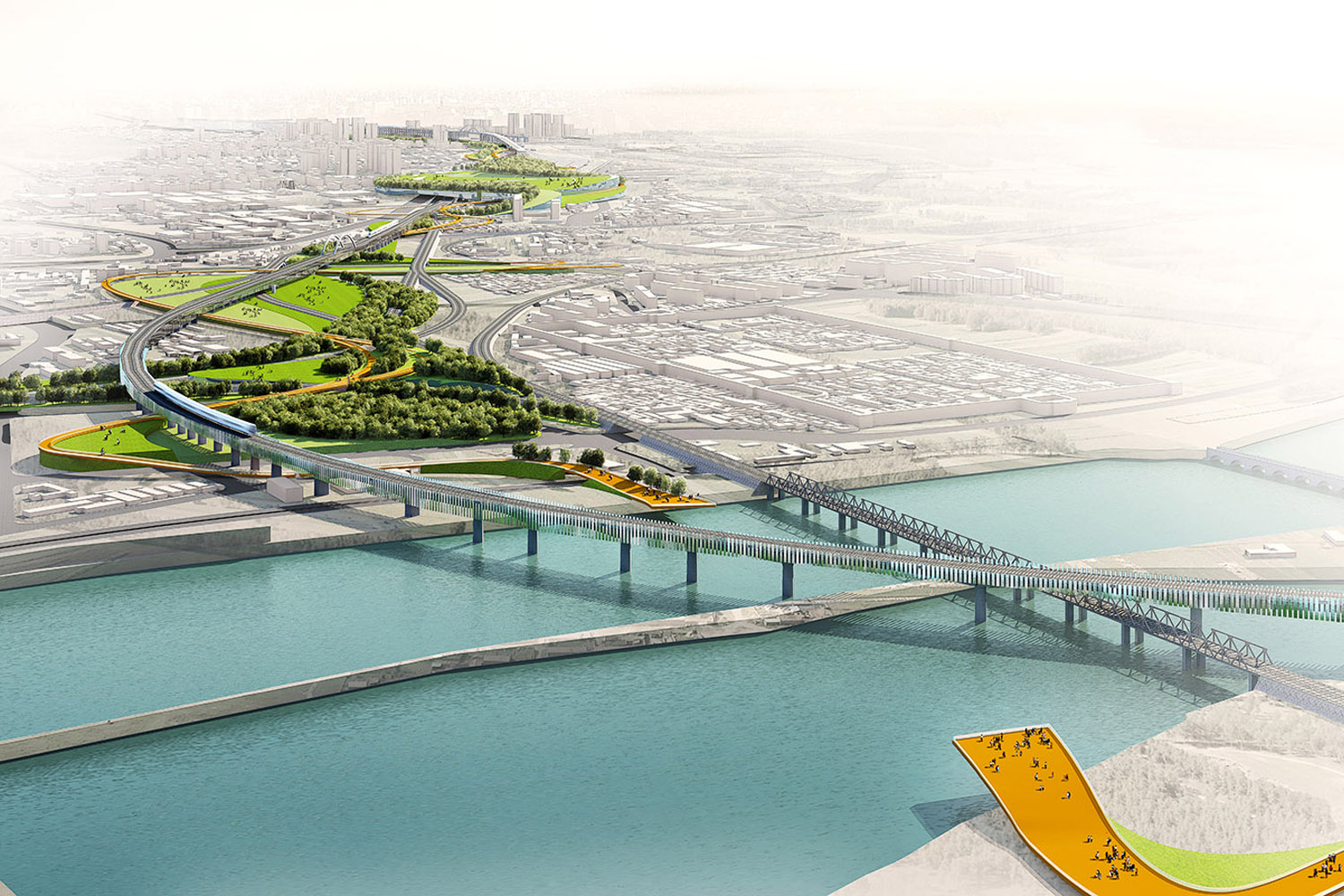
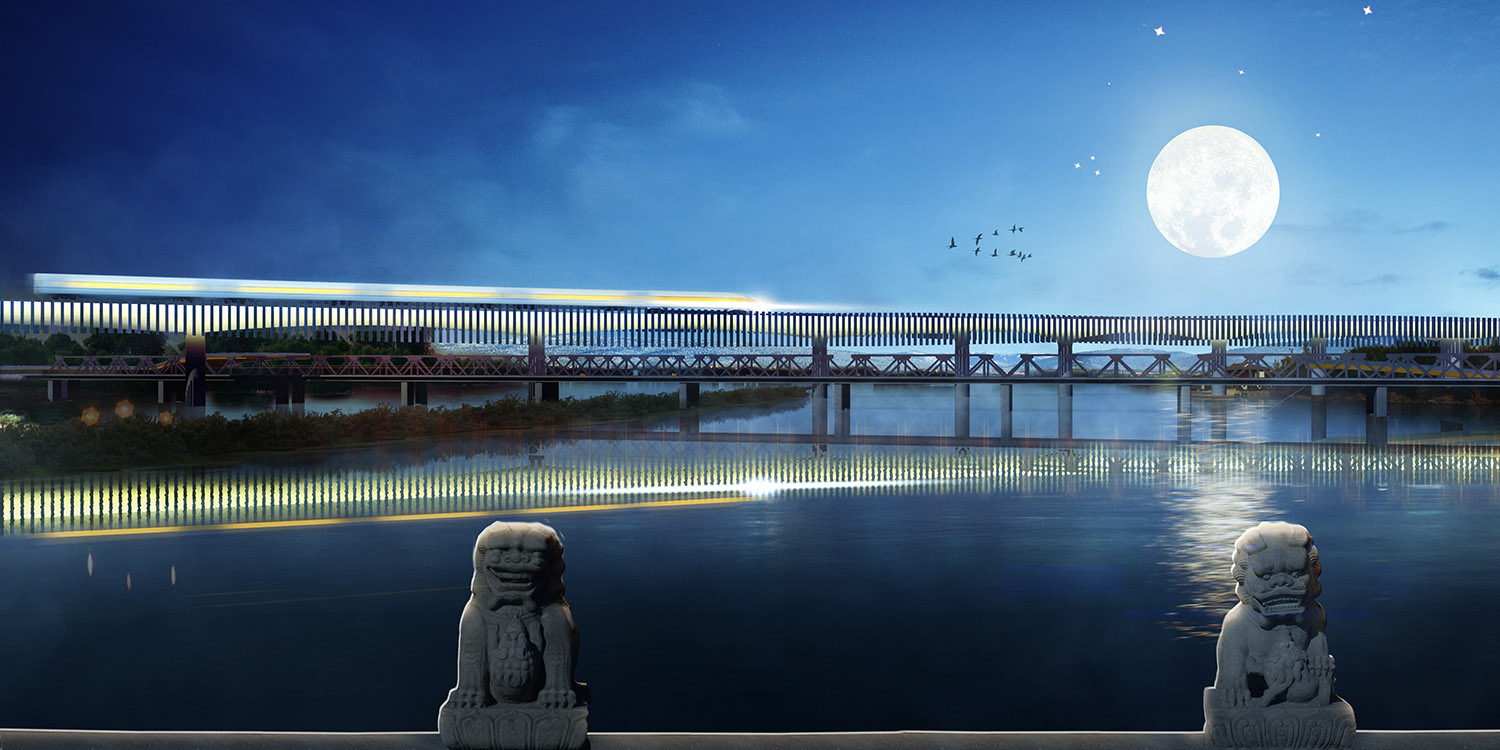
As an initial step, to “blend” the colossus into its surroundings, Crossboundaries proposed to line the sides and the pillars of the Fengtai Bridge with mirror panels, absorbing and mirroring on their shiny outside the ever-changing landscape around them, an attempt to integrate the massive new bridge architecture into the urban environment. With the high-speed trains, masterpieces of technical progress, seemingly floating above, the mirrored surfaces reflect the sky, different weather situations, distant mountains, the water in the rivers and the green scenery.
Noise reduction. Practical Considerations.
The continuous rhythmic surface of the mirrored paneling can potentially also function as an acoustic shield. Stainless-steel mirror finish coated sheets are applied in different reflection grades (6K, 8K, or 10K) to the bridge, creating the reflective surface visible towards the viewer. On designated areas, wherever noise reduction is vital, the panel is reinforced with a sandwich board, containing a mineral wool insulation layer that offers a much higher level of noise absorption.
Stainless steel has good self-cleaning properties, but still needs to be maintained and cleaned to keep its self-repair mechanisms and a good appearance active. Basic dirt is sufficiently washed off by rain, but since Beijing usually doesn’t get too much rainfall, some additional cleaning within the general maintenance works is necessary.
Joining Together: Trails as Threads.
For Crossboundaries, it became quickly evident, that just “covering up” the bridge would only provide an aesthetical touch up and be mere decoration. Urban planning considerations obliged the architects to look further into how to create more effective and functional interactions of a city’s residents & visitors with its infrastructure, providing sustainable solutions for optimized use of space and for connections as well as allowing for all kinds of activities and interplay between citizens and infrastructure.
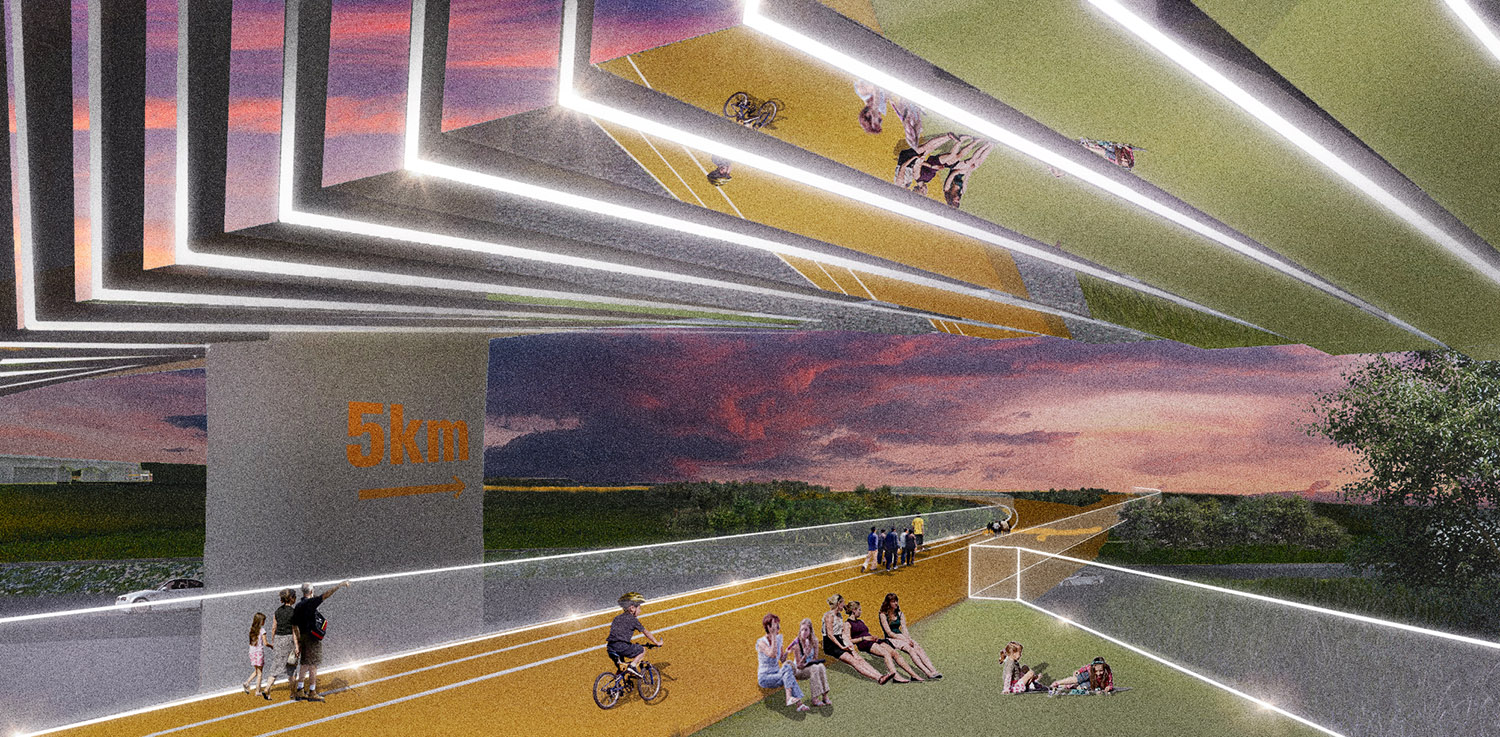
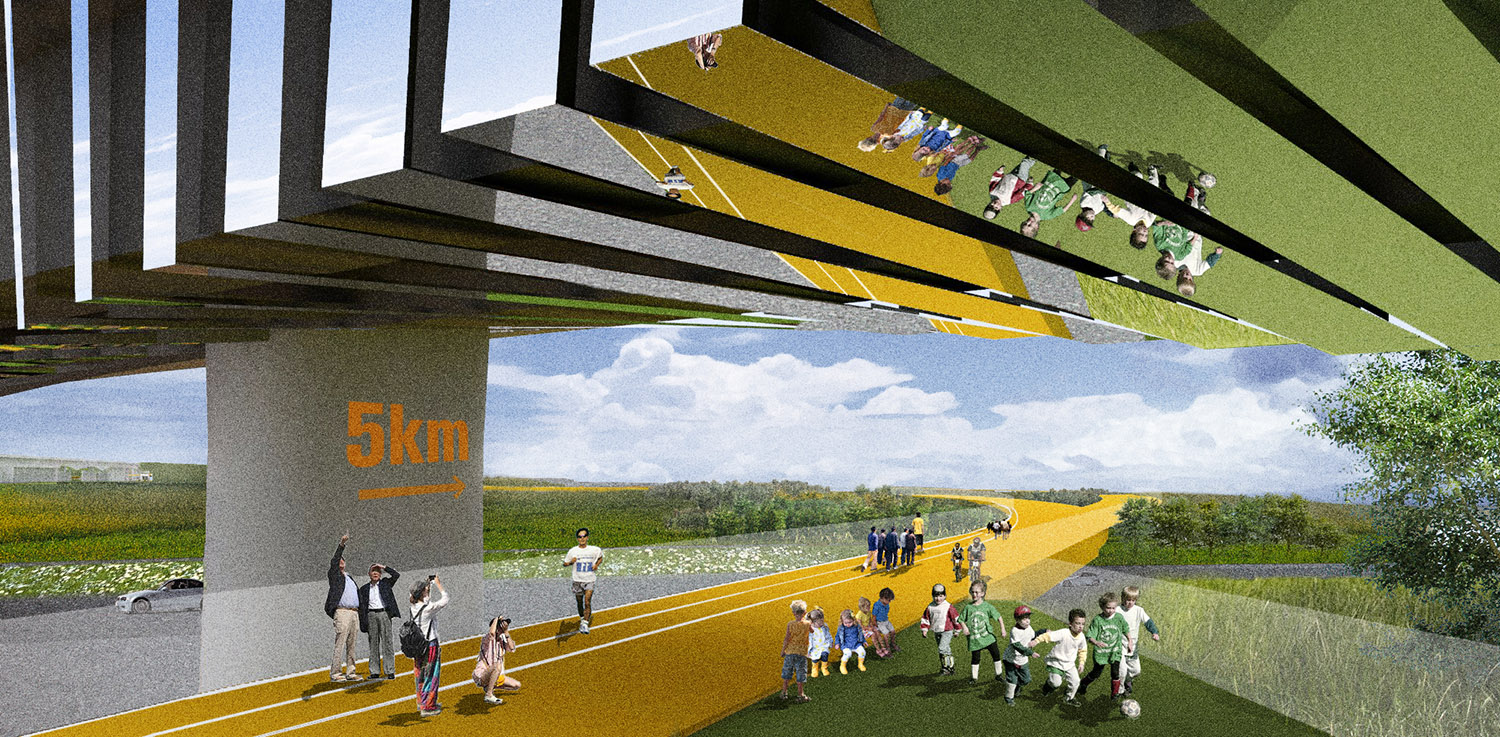
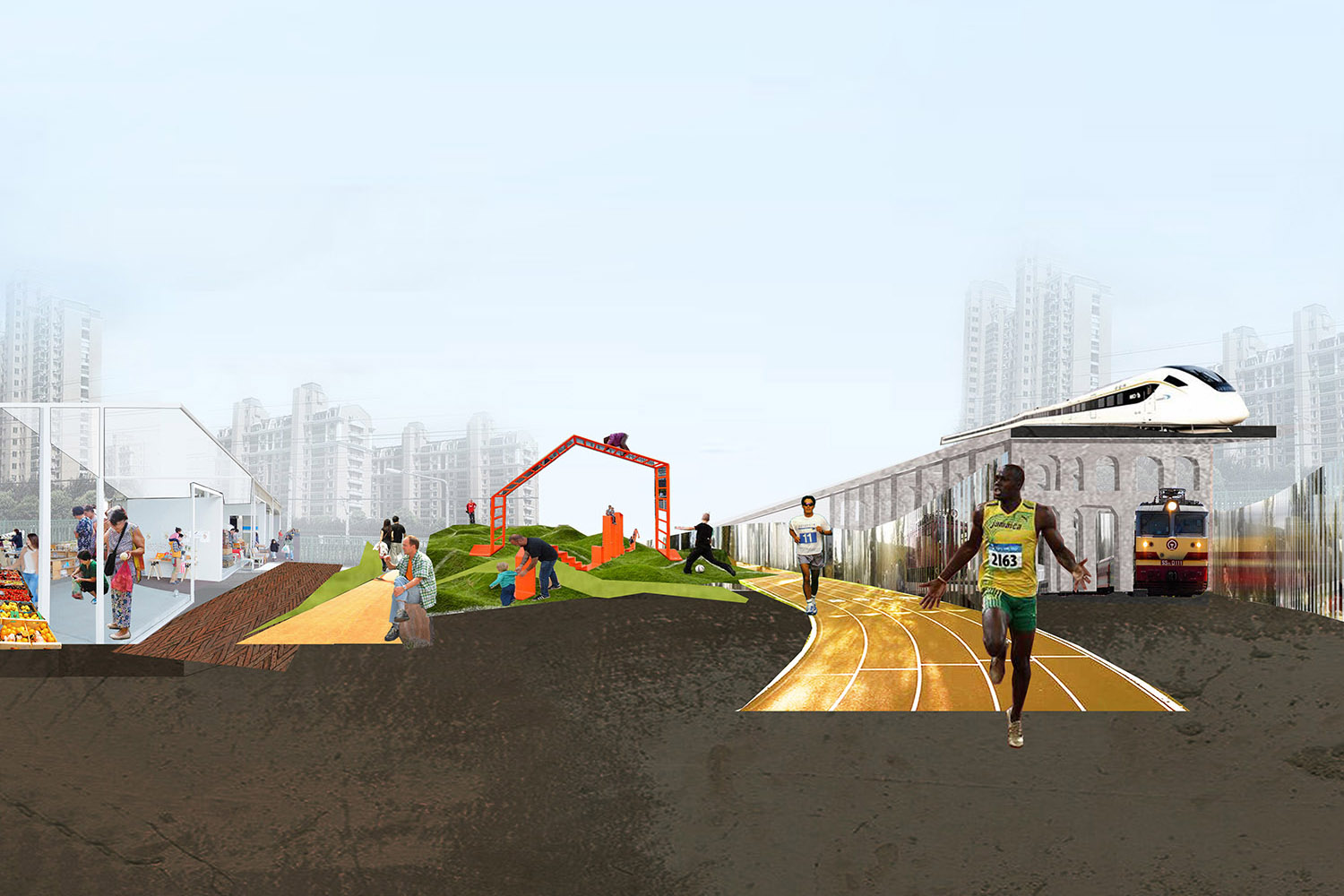
The initial approach adopted by the architects was to break through the protected safety zone along the rail tracks of the elevated infrastructure, to stimulate integration instead of separation. After consulting the bridge construction authorities, the planners had found out that the area generated by this 16m wide, heavily fenced corridor on both sides of the tracks is basically idle and unused, apart from evacuation zones every 3km. Multifunctional walkways, combining strolling, running, cycling, leisure and other activities are proposed to be inserted along both sides of the bridge.
The height of this trail changes continuously. Following the surrounding terrain, it can remain on the ground, combined with green space, such as a leisure park becoming the entrance of the trail. Here and there it can be lifted from the ground to above the road levels and form naturally interior spaces underneath that can be used for shops, F&B, recreational activities or other leisure functions.
Crossboundaries divided the Fengtai Bridge area development into three planning sections, according to the terrain conditions and different elevations.
Starting from about 5km in the West of Lugou Bridge, Crossboundaries’ plan includes turning an area that consist mainly of factories and idle land into sub-urban, multifunctional sports and leisure park zones, where visitors potentially stay from half to up to a full day. In this section, many trails are lifted above ground and hence allow for different sized commercial outlets underneath. In this way these spaces can be filled with supporting functions for urban residents (retail, F&B, etc.) visiting the nearby sport and leisure park.
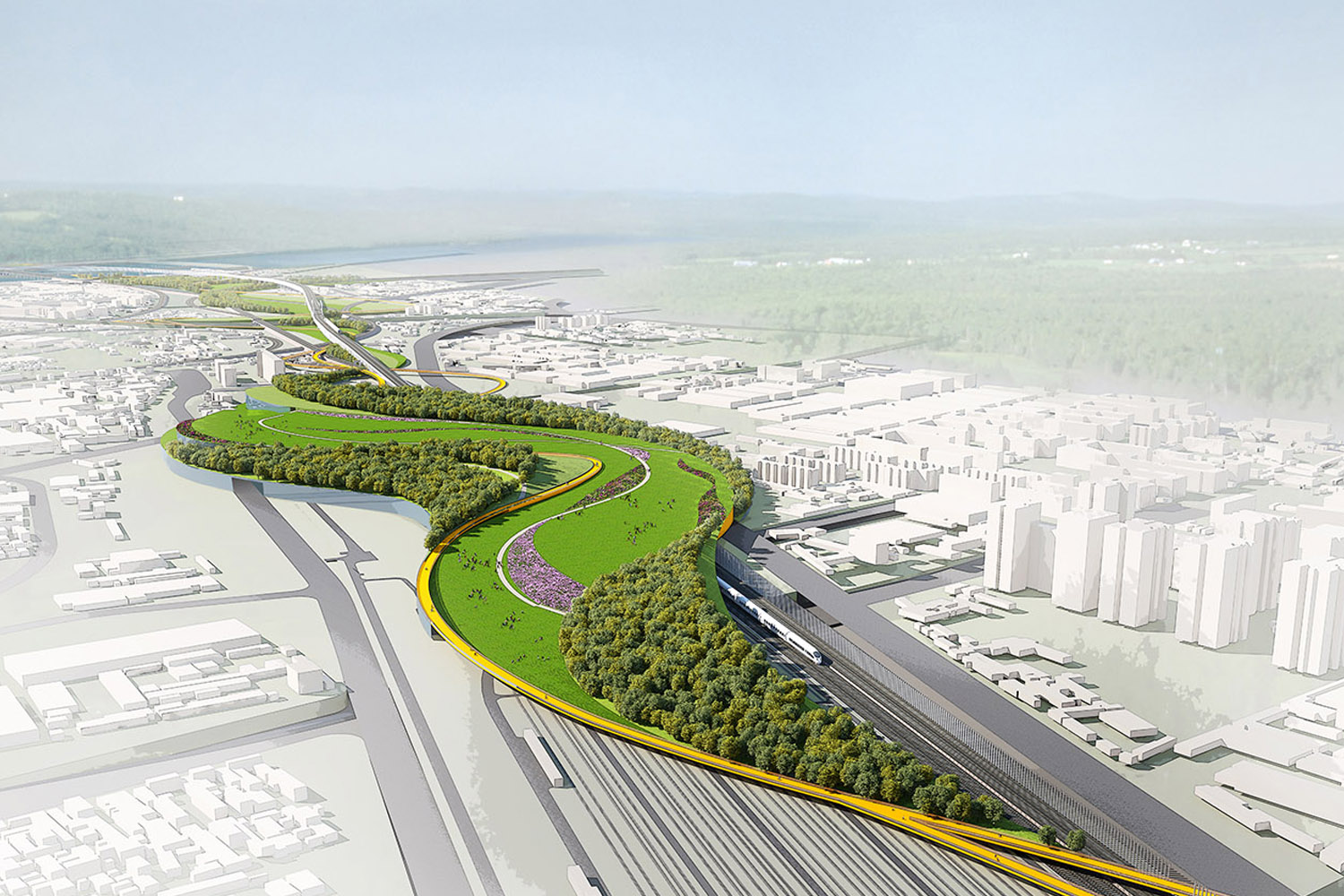
In the very middle of the viaduct is the 3km long zone of the Fengtai Station, where the rail tracks are again all running on ground level. It is surrounded by a large number of residential areas and newly planned subway line connections. As a consequence, the areas above represent large available surfaces that can potentially be further developed into a larger urban park, connecting both sides, the North and South of the railway line and becoming a gathering point for citizens living nearby but also visitors arriving by subway.
The most East 2km section of the railway viaduct is passing over the West Fourth Ring Road, with the railway again lifted above, even the public highway. Crossboundaries developed a “Linear Park” for the areas running parallel to the existing tracks on the ground level, offering plenty of usable area for markets, sport & leisure and other activities for the residents of the surrounding districts.
Gradual Change. Steps to Implementation.
Despite the usual speed in which large construction projects emerge in China, a project of the scope and complexity of the urban planning proposed by Crossboundaries for the Fengtai High Speed train viaduct area is also a collective process. It requires extensive dialogue, exchange and also acceptance among all the stakeholders – such as local and central government authorities, residents, businesses and other involved parties. The architects therefore divided the overall landscape implementation into four steps, gradually carried out over a period of 10 years to allow for enough time for alignment and a thorough approach in realizing this project.
- Improve the landscape within the security fences along rail tracks.
- Extend the green areas beyond the fence to the areas outside of it, begin assimilation with city landscape, partial opening.
- Remove fence and connect with surrounding landscape through different level trails, that are open to the public. ¬
- Expand landscape into 3D – elevate landscape, plan supporting businesses and functions, sustainable development, finalize implementation of TOD principles.
The mirror paneling could be applied in Step 1 already, as the application would take place within the existing fence, or be carried out at a later stage.
Wrap up. Sustainable Urban Design.
“Our concept is based on a very conscious interaction with the existing spaces, the resources and the infrastructure of a city, and we adopt a special TOD approach in order to conceive social and multifunctional transportation areas”, co-founder Binke Lenhardt says,
“In our view, infrastructure provides to people not only more convenience, but potentially also more diversity. Looking into solutions for harmonious co-existence, stimulations of interactions and integration of infrastructure, urban landscape and people are for us at the intersection of successful urban planning considerations. As architects we strongly believe that we have a responsibility to realize concepts for a livable city in the future, in order to achieve a sustainable urban living environment.”