

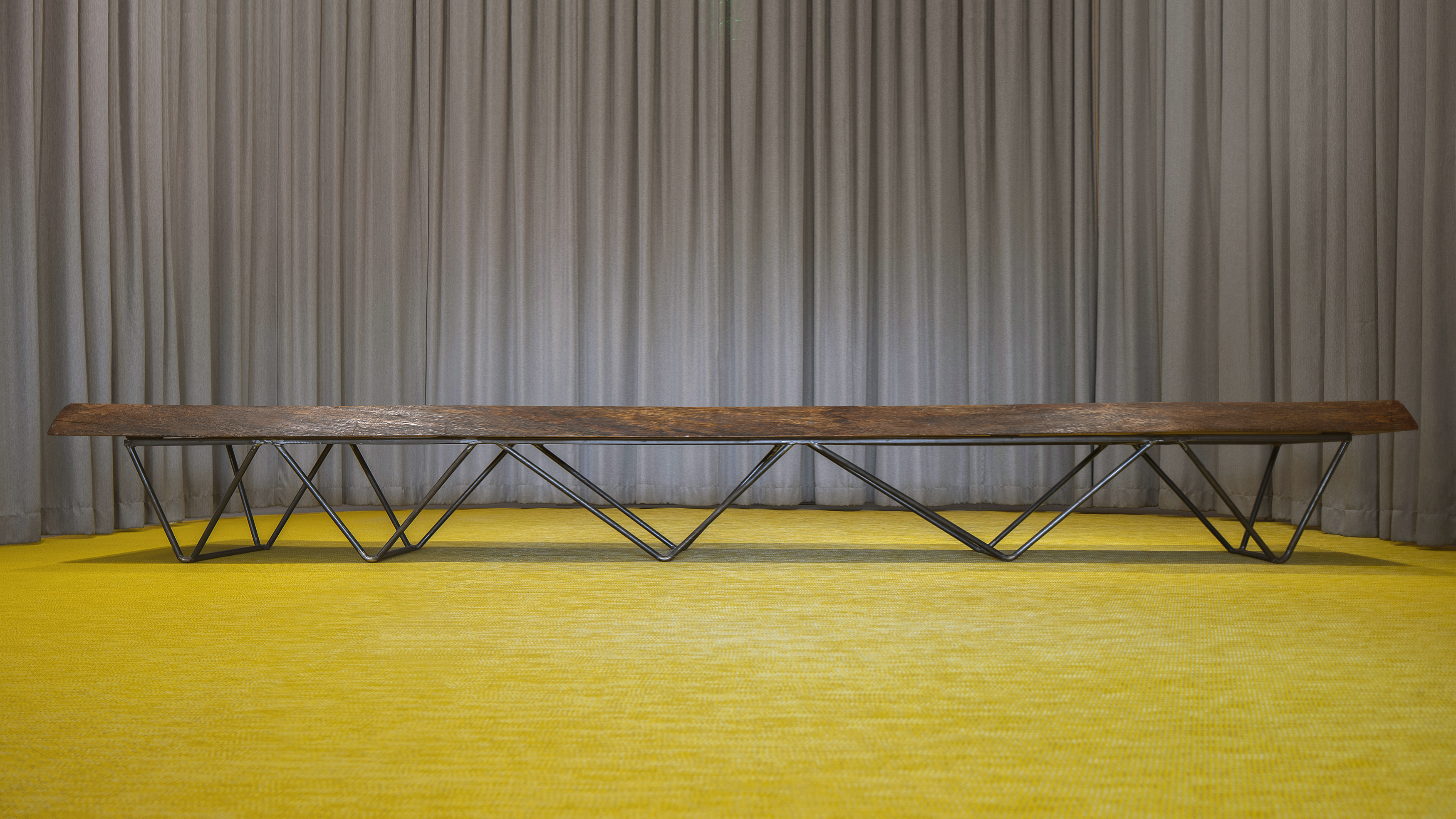
A piece of Black Walnut from Downton Abbey traveled the world and arrived at our carpenter friend’s backyard. Before turned into smaller pieces, we found it and were fascinated by its mysterious history. Soon we decided to purchase it and preserve it in a more honoring way. We restored the wood to its original condition and elevated it with a specially designed frame system according to its shape. The outcome is satisfyingly pleasant: a beautiful piece of wood that offers us and our guests the enjoyment both aesthetically and functionally.

“RESTING TREE” BENCH
A beautiful piece of wood that offers Crossboundaries and our guests the enjoyment both aesthetically and functionally.

Rather than imposing anything, the timeless beauty arose just due to showing the old object's original state. Using slight interventions to maximize the objects' value, this design method had provided a protection-based design strategy that could apply to any natural piece.
DATA
Project: Seating Design for Crossboundaries Office
Client: Crossboundaries
Program: Seating Design
Location: BEIJING, CHAOYANG DISTRICT, Crossboundaries
CREDITS
Partners in charge: Binke Lenhardt, DONG Hao
Design Team: Alan Chou and Crossboundaries designers
Photographer: HUANG Biao, ZHAN Ziyu

MORE
According to our carpenter friend, the wood was from a Black Walnut tree that fell during a severe storm in Downton Abbey. The hundred-year-old tree with a diameter of 1.1 diameters was then auctioned with a price of 11000 pounds. Traveling across the ocean, the log arrived in Beijing, where most of it was trimmed to make furniture. Fortunately, our piece is the top sawn with the least usable material, so it was leftover by our carpenter friend.
We met the wood when we were looking for materials for our bookshelves. At first glance, we were astounded by its magnitude and roughness. And soon after we heard about the wood’s mysterious history, our office decided to purchase it and preserve it in a more honoring way.
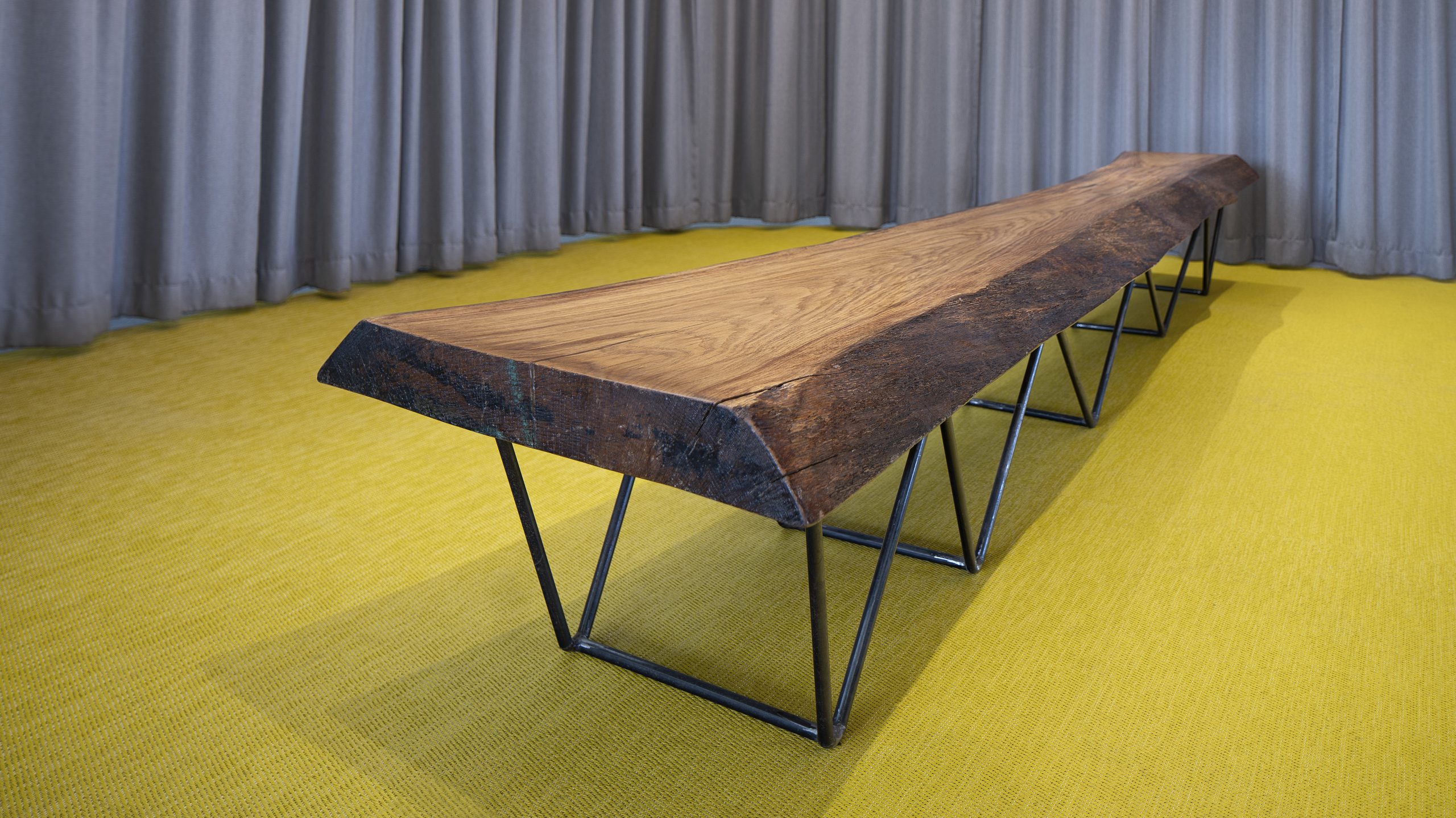
Bench seemed to be the perfect option as it combined showcasing with functionality. With minimal polishing and varnishing, we restored the wood to its original condition and revealed the natural beauty. The texture of wood grain, together with the annual ring pattern, dwarfed any artificial decoration. As a result, we had to carefully design the system to elevate and illustrate nature without disturbance.
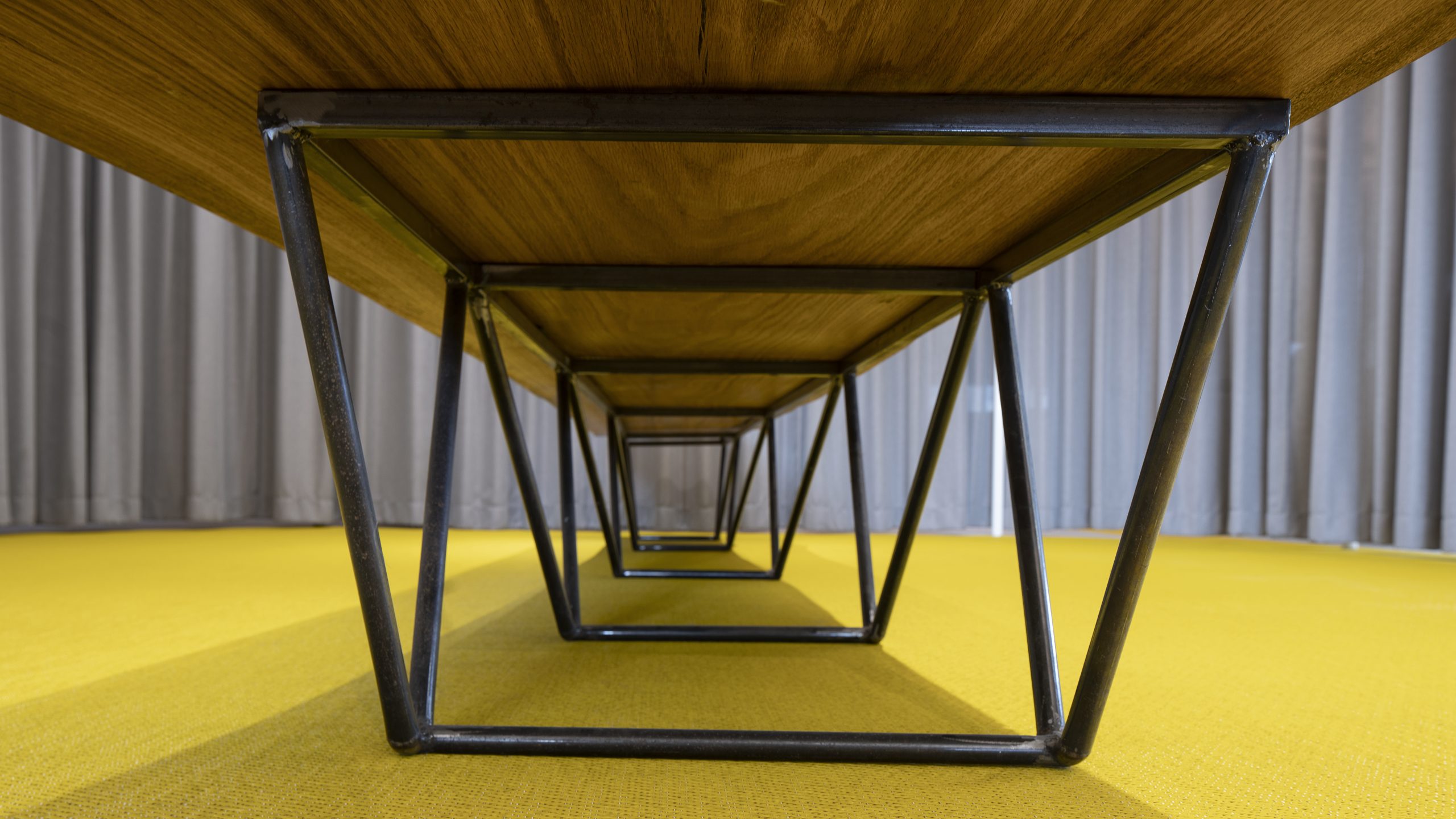
The steel used to elevate was lightweight to draw all the attention to the wood piece’s original beauty. We took inspiration from the characteristics of the wood and created the rhythm of the steel frame. The span of the structure complied with changes in gravity. The length of the structural unit decreased where the width of the wood shrank. Non-standardized size declared that the wood dominated the design.
Rather than imposing anything, the timeless beauty arose just due to showing the old object’s original state. Using slight interventions to maximize the objects’ value, this design method had provided a protection-based design strategy that could apply to any natural piece.
The bench design reflects our respectfulness for the wood and all life. The wood piece is intact yet elevated to demonstrate its natural beauty; the steel frame is minimal yet organic to elaborate the sophisticated stories. This carefully crafted dialogue between artificial and nature shows our greatness and appreciation for nature and all life.
Like all of our design work, we cast targeted methods based on specific situations. We took inspiration from the characteristics of the wood and created the rhythm of the steel frame. The span changes to comply with changes in gravity. The length of the structural unit reduces where the width of the wood shrinks. Non-standardized structure declares our greatness for nature.
Rather than imposing anything, the timeless beauty arises when correctly showing Mother Nature’s original state. Using the slight intervention to maximize all creation’s charmingness, our design has provided an opportunity to rethink humanity’s relationship with nature.